This article introduces example analyses of primary and secondary microplastics utilizing an infrared microscope. Secondary microplastics such as that found in oceans and rivers were prepared as a sample and measured. Microplastics dispersed in water were filtered and collected using a polytetrafluoroethylene (PTFE) filter. In order to identify the many microplastics collected on the filter, mapping analysis was performed using infrared transmission microspectroscopy. Fig. 5 shows an optical microscopic image of the microplastics on the filter. Fig. 4 shows typical infrared spectra from the areas in Figs. 3-(a) to (c). The measurements revealed that the microplastics in the sample were polyethylene (PE), polypropylene (PP), and polyethylene terephthalate (PET).
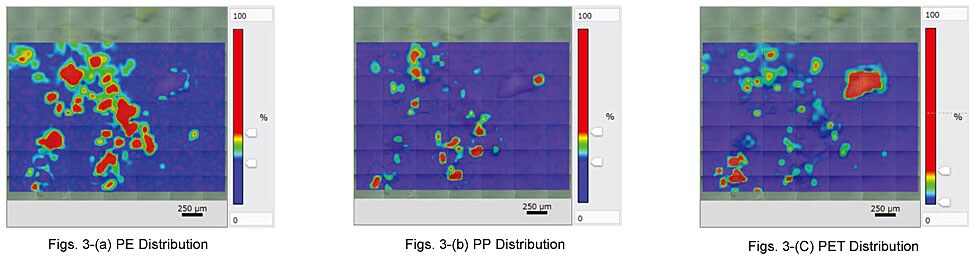
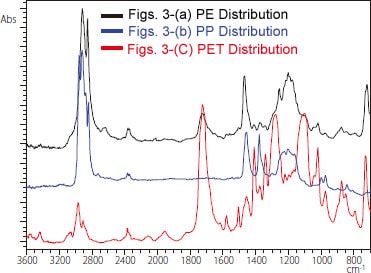
Fig. 4 Typical Infrared Spectra from Areas in Figs. 3-(a) to (c)
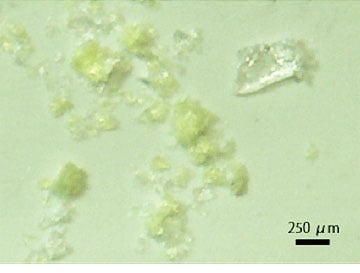
Fig. 5 Microplastics on the Filter
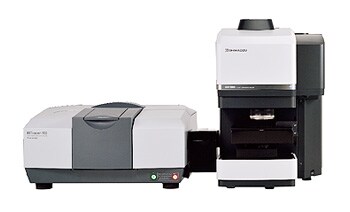
Using an infrared microscope, microplastics collected on a filter paper can be identified and mapping analysis performed. Minute test samples can be measured with good sensitivity, and component analysis can be rapidly performed using an extensive library of standards.